I went yesterday, with Osvaldo Quintero, Euclides "Kilo" Campos and my nephew Michael,  to a trip along the Panamerican highway to the Cocle province (central Panama, pacific side) in a quest of some specialties of the area. We did many stops along the route looking for specific targets. Our first stop was at the now-famous El Chiru in order to find the very local Grassland Yellow-Finch. The day was pretty hot, but the activity in the fields soon proved to be quite good. In a huge pasture, Kilo found our first target right in the middle of it. A group of at least five Grassland Yellow-Finches were feeding in the tall grass, showing themselves only for few seconds each time. The patch of grass where they were feeding was close enough to have great looks at the birds with our binoculars, but frustrating far for our cameras! Despite all our efforts, we were not able to get any closer, and our photos only show a
  pack of yellow pixels in the middle of the grass (a yellow-finch facing to the other side)... but is all what we got, by now. We were cautious recognizing each single bird because we also found Lesser Goldfinches in the same pasture, and the females can look similar to the yellow-finches, specially at the distance. Other species in the same field were Variable, Ruddy-breasted and Yellow-bellied Seedeaters, Blue-black Grassquits, Red-breasted Blackbird and Eastern Meadowlarks. Time for the next target, we
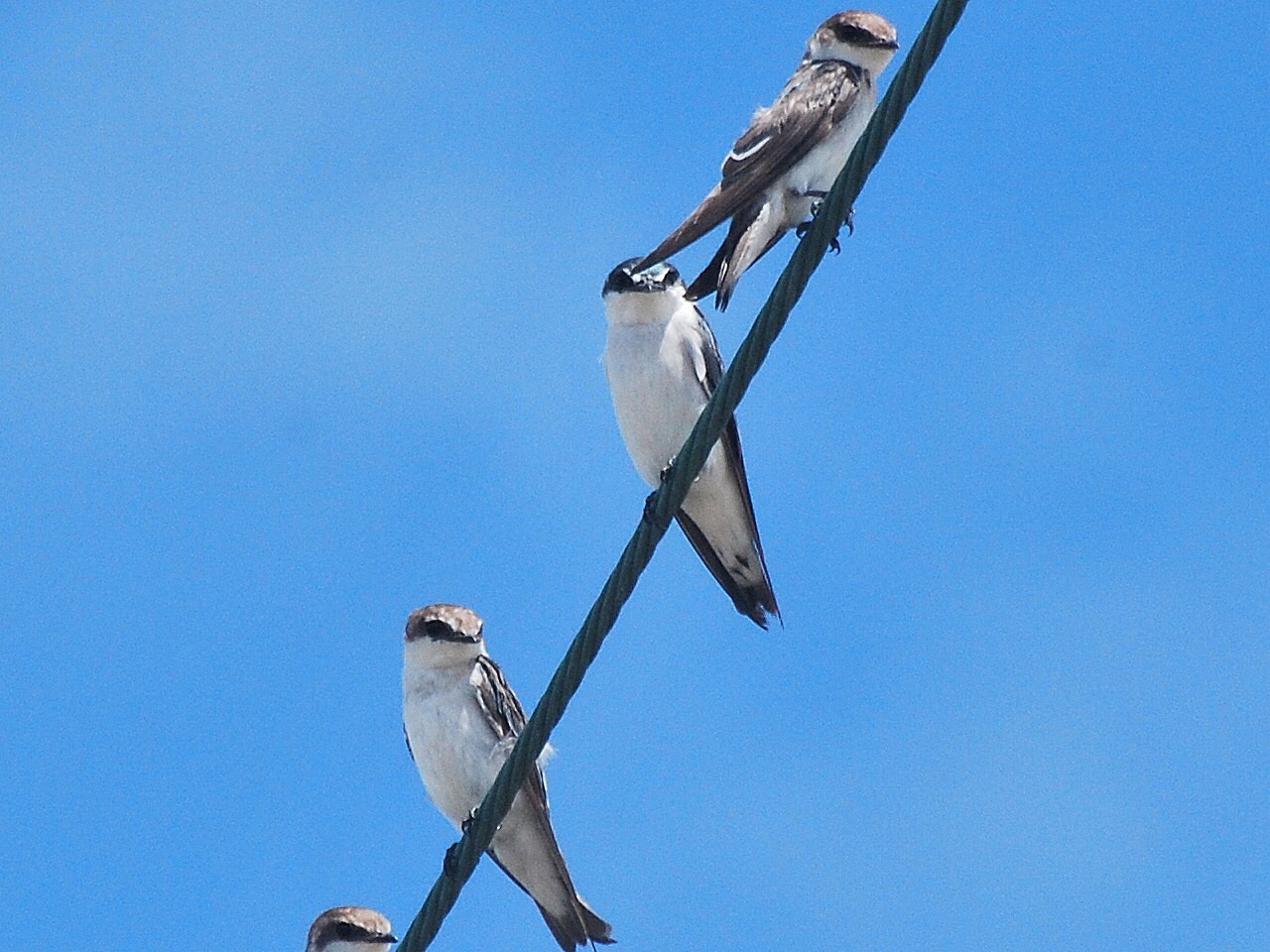
  headed to the Aguadulce Salinas (saltponds). Our plan was to search at the mangroves for the White-winged Dove, a bird that somehow have eluded Osvaldo so far. Of course we took our time to inspect the saltponds in the way to the mangroves, finding many species of shorebirds, some of them still with part of its alternate plumage (but more on them in my next post), a huge group of Black Skimmers resting, a flock of Mangrove Swallows in different ages, and
  three terns species: Gull-billed, Sandwich and Least. The Least Tern was alone, gently picking food of the surface of one of the ponds. Again, we were extremely cautious in separating it of the similar Yellow-billed Tern, which have been reported from that place. The black tip of the yellow bill and the little amount of black in the primaries confirmed our id. Back in the road, we reached the mangroves along the road to El Salado where we stopped in several places. In one of them, Kilo obtained an answer to his
 .JPG) playback and soon a pair of White-winged Doves showed themselves. What a delicate creature, a very attractive dove that in Panama only lives close to the coast in the Gulf of Parita. It reappears in northern Costa Rica to extend all the way northward into the United States (the same distribution of the Common Ground-Dove). In the way out, we found a Common Black-Hawk in a wire, preening and taking a sunbath. The race of the Pacific coast used to be a different
playback and soon a pair of White-winged Doves showed themselves. What a delicate creature, a very attractive dove that in Panama only lives close to the coast in the Gulf of Parita. It reappears in northern Costa Rica to extend all the way northward into the United States (the same distribution of the Common Ground-Dove). In the way out, we found a Common Black-Hawk in a wire, preening and taking a sunbath. The race of the Pacific coast used to be a different  species, the Mangrove Black-Hawk. We then followed the Panamerican highway looking for an Aplomado Falcon. We drove many miles, but we simply were not lucky with that one. Anyway, we saw tons of raptors, as usual in that habitat, including Osprey, White-tailed and Pearl Kites, Short-tailed, Roadside, Gray, Savanna and Common Black Hawks, Crested and Yellow-headed Caracaras and American Kestrels. After a tasty meal in Divisa, we drove back to Penonome, where we took the road to El Gago. We failed to
  locate the Yellowish Pipits that reside in those fields, but found many Crested Bobwhites, some Mourning Doves, got close views of three vultures species, including the Lesser Yellow-headed Vulture pictured above and a pair of Plain-breasted Ground-Dove (male and immature) that stayed enough for a photo. It was a great day for birding, and long too... we spend 13 hours in the field looking for birds!
 to a trip along the Panamerican highway to the Cocle province (central Panama, pacific side) in a quest of some specialties of the area. We did many stops along the route looking for specific targets. Our first stop was at the now-famous El Chiru in order to find the very local Grassland Yellow-Finch. The day was pretty hot, but the activity in the fields soon proved to be quite good. In a huge pasture, Kilo found our first target right in the middle of it. A group of at least five Grassland Yellow-Finches were feeding in the tall grass, showing themselves only for few seconds each time. The patch of grass where they were feeding was close enough to have great looks at the birds with our binoculars, but frustrating far for our cameras! Despite all our efforts, we were not able to get any closer, and our photos only show a
  pack of yellow pixels in the middle of the grass (a yellow-finch facing to the other side)... but is all what we got, by now. We were cautious recognizing each single bird because we also found Lesser Goldfinches in the same pasture, and the females can look similar to the yellow-finches, specially at the distance. Other species in the same field were Variable, Ruddy-breasted and Yellow-bellied Seedeaters, Blue-black Grassquits, Red-breasted Blackbird and Eastern Meadowlarks. Time for the next target, we
  headed to the Aguadulce Salinas (saltponds). Our plan was to search at the mangroves for the White-winged Dove, a bird that somehow have eluded Osvaldo so far. Of course we took our time to inspect the saltponds in the way to the mangroves, finding many species of shorebirds, some of them still with part of its alternate plumage (but more on them in my next post), a huge group of Black Skimmers resting, a flock of Mangrove Swallows in different ages, and
  three terns species: Gull-billed, Sandwich and Least. The Least Tern was alone, gently picking food of the surface of one of the ponds. Again, we were extremely cautious in separating it of the similar Yellow-billed Tern, which have been reported from that place. The black tip of the yellow bill and the little amount of black in the primaries confirmed our id. Back in the road, we reached the mangroves along the road to El Salado where we stopped in several places. In one of them, Kilo obtained an answer to his
 .JPG) playback and soon a pair of White-winged Doves showed themselves. What a delicate creature, a very attractive dove that in Panama only lives close to the coast in the Gulf of Parita. It reappears in northern Costa Rica to extend all the way northward into the United States (the same distribution of the Common Ground-Dove). In the way out, we found a Common Black-Hawk in a wire, preening and taking a sunbath. The race of the Pacific coast used to be a different
playback and soon a pair of White-winged Doves showed themselves. What a delicate creature, a very attractive dove that in Panama only lives close to the coast in the Gulf of Parita. It reappears in northern Costa Rica to extend all the way northward into the United States (the same distribution of the Common Ground-Dove). In the way out, we found a Common Black-Hawk in a wire, preening and taking a sunbath. The race of the Pacific coast used to be a different  species, the Mangrove Black-Hawk. We then followed the Panamerican highway looking for an Aplomado Falcon. We drove many miles, but we simply were not lucky with that one. Anyway, we saw tons of raptors, as usual in that habitat, including Osprey, White-tailed and Pearl Kites, Short-tailed, Roadside, Gray, Savanna and Common Black Hawks, Crested and Yellow-headed Caracaras and American Kestrels. After a tasty meal in Divisa, we drove back to Penonome, where we took the road to El Gago. We failed to
  locate the Yellowish Pipits that reside in those fields, but found many Crested Bobwhites, some Mourning Doves, got close views of three vultures species, including the Lesser Yellow-headed Vulture pictured above and a pair of Plain-breasted Ground-Dove (male and immature) that stayed enough for a photo. It was a great day for birding, and long too... we spend 13 hours in the field looking for birds!


 Posts
Posts