Showing posts with label Meteti. Show all posts

Thursday, September 12, 2019

Darien Lowlands Clean-up!

Darien, of eastern Panama, is the largest and less-developed province of the country, home of great biodiversity, including tons of endemics and regional specialties found nowhere else in North America.  That is why, if you are doing a Panama (or Central America) Big Year you MUST include several trips to this province.  I covered well the highlands of the province with their hordes of endemics (see field trips posts HERE and HERE), getting some lowlands species as well in the same trips plus other trips with specific targets (like my flash trip to Finca Los Lagos)... but I still needed some lowlands specialties of the province.  So, I contacted Domiciano "Domi" Alveo, of Birding Trips Panama, an experienced bird guide and good friend of mine, to take me to the eastern lowlands in search of those targets.
Because I'm always short of time, we planned a weekend trip leaving Panama City Friday afternoon.  Leaving the city on Friday afternoon is a mess, but somehow we managed it without too much delay.  The 4-hours trip to the town of Metetí was more enjoyable with Domi's company ... we talked about the possibilities that awaited us all the way, and we even had time to spy an Striped Owl on the side of the road.  We got to our hotel at Metetí on time to sleep right away!
Striped Owl
Very early the next day, at first light we were boarding our "piragua" at the town of La Peñita, along the Chucunaque river.  Our destination was the Embera village of Nuevo Vigía, along the Tuquesa river, a tributary of the Chucunaque river.  This community has received visiting birders and naturalists since a while ago and are  well aware of the benefits of the sustainable tourism activities.  It became clearly evident that they know their birds... after all, where can you see a Welcome Sign with Dusky-backed Jacamar on it?
Domi and our boatman on the piragua along the mighty Chucunaque river
"Welcome to the community of Nuevo Vigía"
In fact, the Dusky-backed Jacamar was my main target for the site.  This range-restricted species is only found in eastern Panama and north-western Colombia.  It is quite localized, but usually faith to known locations where it is quite reliable... but you need the local expertise to find them anyway.  A short boat ride took us to a former orchard, now overgrown.  We immediately started to find some eastern Panama specialties, like Capped Heron, Spectacled Parrotlet, Black-tailed Trogon, Double-banded Graytail and Black Oropendola.  Soon Domi located our target: a young male Dusky-backed Jacamar was quietly waiting for its prey to fly-by.  Nice start!  Soon we moved to another locality, this time closer to the village.  The trail took us through secondary forests and degraded areas, to finally reach a swampy area where we looked after Black-collared Hawk without success; however, we got the most amazing views of secretive Bare-crowned Antbirds in the understore.  The pair, but specially the adult male, left us astonished while they confidently stayed in the open, preening and showing off.  Believe me or not, that was my second sight ever of this species and a great addition to my Year List!
Dusky-backed Jacamar
Adult male Bare-crowned Antbird showing its bare crown!
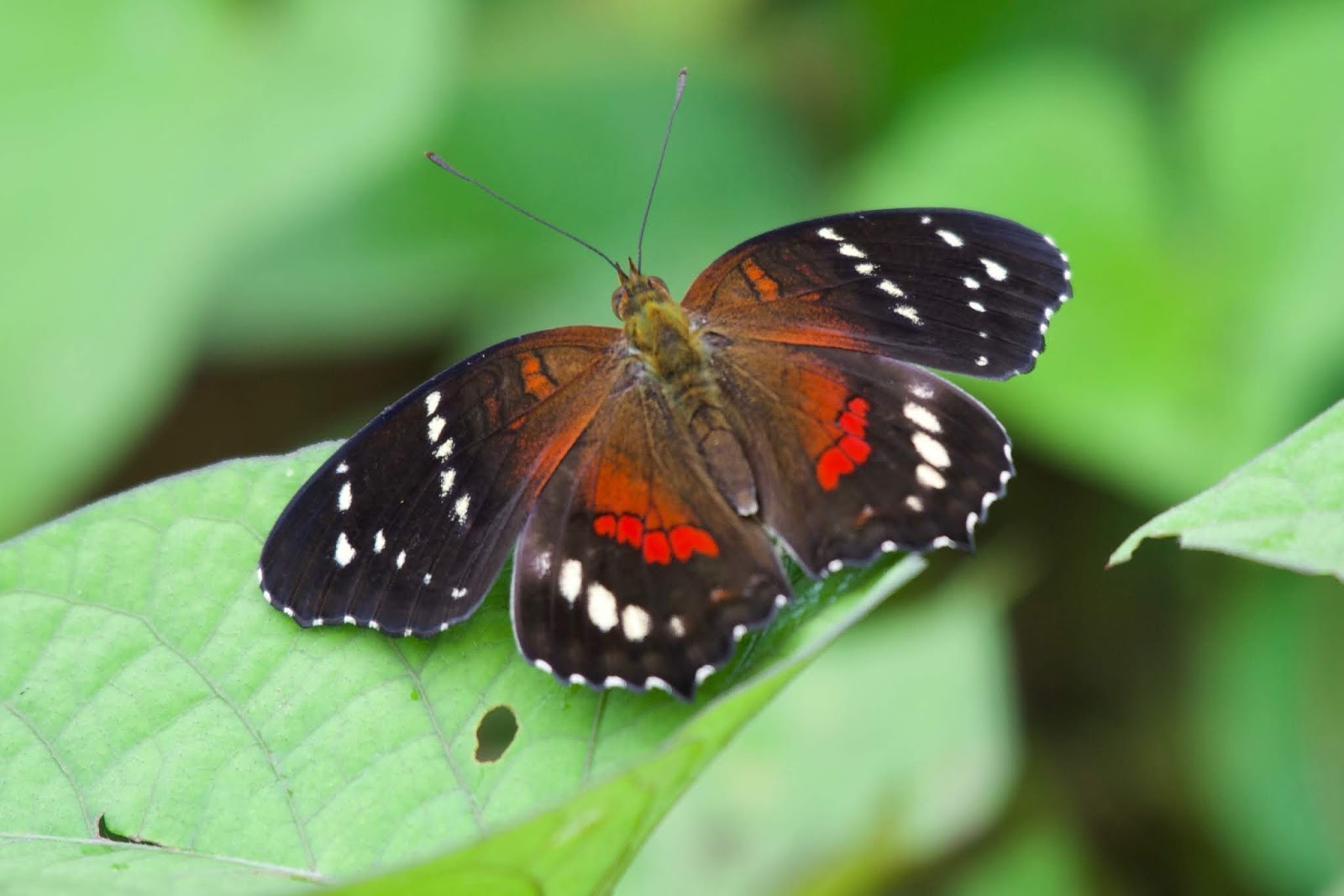
But there were not only avian highlights in Nuevo Vigía.  The open areas and the village itself were exceptionally good for butterflies, including rare and restricted species.  The whites, yellows, sulfurs and patches were exceptionally common, but the diversity was so high that I'm still trying to ID some of them.  My personal highlights were the Glorious Blue-Skipper (Paches loxus), the Zebra Lonwing (Heliconius charithonia) and my long-expected lifer Red Peacock (Anartia amathea) which is an specialty of eastern Panama.
Glorious Blue-Skipper
Zebra Longwing
Red Peacock
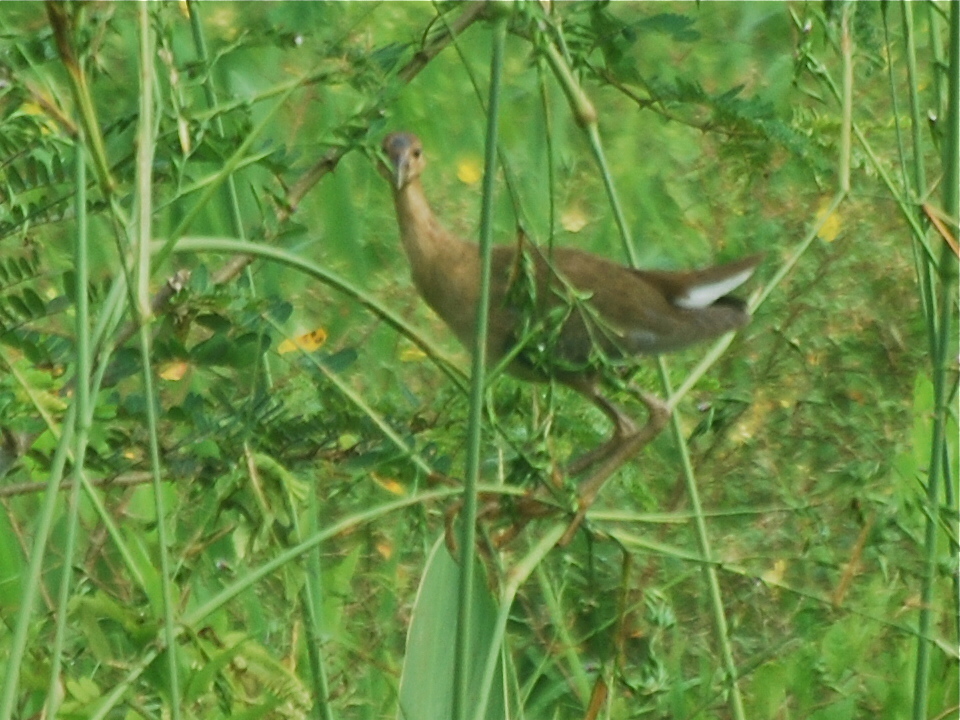
Short before midday, we left Nuevo Vigía in order to visit some sites along the Pan-American highway.  The short stops along the road produced more and more eastern Panama specialties, but certainly the highlights were a singing Red-billed Scythebill and a pair of dueting Black-capped Donacobius allowing great views.  Other highlights of these stops along the highway were Yellow-hooded Blackbirds, Large-billed Seed-Finch, Pied Water-Tyrants, Gray-breasted Crake and a mixed flock with rare White-chinned and Spot-fronted Swifts among others (check this eBird checklist).
Red-billed Scythebill
Black-capped Donacobius
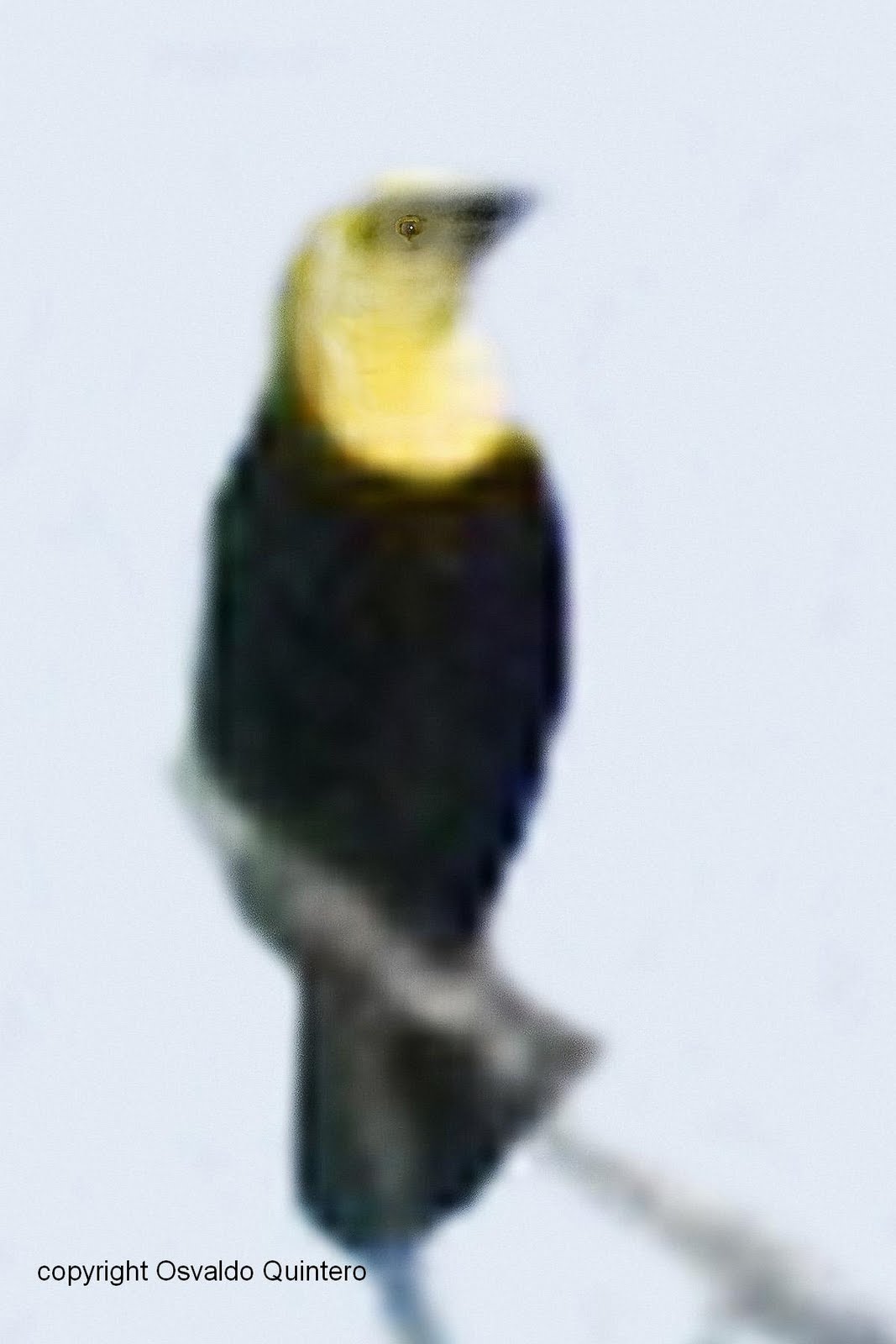
Yellow-hooded Blackbird, adult male
Eventually, we reached the town of Yaviza, at the very end of the Pan-American highway.  This town is the gateway to Darien National Park and to hundreds of communities only reachable through piraguas.  We had lunch there and then spend the part of the afternoon looking for some other species.  The usual stakeout for Bicolored Wren (the graveyard) worked well... we saw a family group near its huge nest foraging at all levels and taking dust baths.  They have certainly prospered in the place, the same as the Carib Grackles that were quite common at town.  In fact, we saw more Caribs than Great-tailed Grackles and even saw juveniles and begging immatures all around.
Bicolored Wrens
Carib Grackle, female
It was a successful and long day, but was not over.  A good friend of us, also an expert birding guide resident in Darien, invited us a cup of coffee at his house.  Ismael "Nando" Quiroz (of Tamandua Nature & Photo Travel Panama) is almost a legend in the birding world of Darien and we know each other since long time ago, so paying him and his beautiful family a visit was a must.  Nando was free that weekend and agreed to join us the next day... I still had some targets and he knew some nice spots where we could try for them.  For some reason, I mentioned that I still needed Tropical Screech-Owl for my Year List... Nando knew a nearby spot where it was guaranteed.  Of course, we jumped into the car and started to drive.  Soon, a curious screech-owl was in the spotlight, perched along a live fence bordering pastureland with thousands of fireflies... what a show!
Tropical Screech-Owl
As planned, we met Nando again for breakfast the next day.  We visited several sites, including famous ones like the roads to Lajas Blancas and to El Salto, finding many eastern Panama specialties (and Year birds) like Red-throated Caracara, Barred Puffbird, Orange-crowned Oriole, White-eared Conebill, among others.  But for my main target of the trip, Nando took us to some rice fields by Quebrada Félix.  Of the five species of macaws in Panama, four of them are found in Darien province and, for some reason, one of them have eluded me all these years.  Supposedly common, the Chestnut-fronted Macaw is the smallest of the macaws found in the country.  Probably bad luck or simply short time birding the appropriate habitat explains why I still needed that bird for my Panama list, but I was decided to add it to my lists this year... so was Nando.  Soon, he heard a pair flying across the field and I was finally able to put my binoculars on them.  They were far away... but eventually we got much better views of other individuals (but no better photos).
Chestnut-fronted Macaws
With most of our targets in the bag, and running out of time, we said good-bye to Nando and started our journey back to Panama City.  Birding can not be easier when you have two excellent guides by your side.  Thanks guys for the GREAT weekend.  I recommend both for them if you want to visit Darien province of eastern Panama..., please don't hesitate to contact them!
Great White Longtail (Urbanus chalco) at Nando's backyard!

Monday, March 9, 2015

Looking for lifers in Darien province. Part I

Inspired by the recent reports of rarities showing up in eastern Panama, I decided to drive more than 250 km last weekend through pot-holed roads into central Darien province with my family.  After literally "escaping" Panama City's traffic jam, we drove all the way non-stop except in the little town of Tortí to have dinner.  Our surprise was that the restaurant we chose had hummingbird feeders!
Scaly-breasted Hummingbird
It was late and the light was fading; however, we saw six different species of hummingbirds attending the feeders, including the Scaly-breasted Hummingbird pictured above.  It was my first for the year.  After our tasty dinner, we reached the town of Metetí at night.  After checking in at our modest hotel, we went to sleep without setbacks.  Early the next day, we ate our breakfast preparing for the long drive to the town of Yaviza.  I only recorded common species in Metetí, with this leucistic House Sparrow as the highlight.
leucistic House Sparrow
The deteriorated road made the drive to Yaviza a 1-hour trip.  At this town is where the PanAmerican Highway ends... literally (the only gap along this route from Alaska to Tierra del Fuego!), and is the entrance gate to emblematic towns in eastern Darien (like El Real, Pirre, Boca de Cupe, Paya, Pucuru, etc...) and to Darien National Park through pangas and little canoes, using the mighty Chucunaque and Tuira rivers.
Following some published reports, we walked directly to the cemetery at the entrance of the town.  It was quite hot and sunny and I wondered if I had enough information to find my goal.  However, it only took a moment before we noticed a movement halfway up a Corotú tree (Enterolobium cyclocarpum) near the entrance of the place... somehow, Gloriela managed to took a photo of that moment:
Wait!... is that a....
Yes!  I was seeing a Bicolored Wren working the medium level of that tree!  Why so excited?  The Bicolored Wren is a recent colonizer of eastern Panama from Colombia... and Yaviza is, so far, the extreme western part of its expanded range... and a lifer for me and Gloriela!  I got some photos too!
Bicolored Wren
The bird searched carefully every loose piece of bark and each epiphyte quietly, resting just for a couple of seconds before resuming its task.  We only saw this individual... previously,  a pair with a begging young was recorded in that same site.
Bicolored Wren
Bicolored Wren
With our main target in the bag, we drove back to Metetí in order to prepare for our next adventure.  However, we stopped at a forest patch near Yaviza for a while.  Almost immediately we noticed some kettles of Broad-winged and Swainson's Hawks plus many Mississippi Kites migrating.  Then, I heard a familiar call... a little bit of search produced this magnificent Rufous-tailed Jacamar by the road.
Rufous-tailed Jacamar, female
Not only that... some other eastern Panama specialties showed up as well, like Black Antshrike, Double-banded Graytail and Yellow-breasted Flycatchers.  What a great day... but was not over.  After collecting our stuff in the room, we left Metetí and headed to the renowned Canopy Camp, where we booked one night with the intention of observing another rarity... so stay tuned!

Sunday, October 16, 2011

One-day expedition to Darien

Darien is the easternmost, largest and less developed province of Panama, with a rich biodiversity, including hundreds of birds species. And now it is not indispensable to organize a huge expedition to remote areas to enjoy it... as you will read, it is enough with one day! The last weekend of september, I left Panama City the friday's afternoon with Rafael Luck and Osvaldo Quintero toward the town of Meteti, in central Darien. We only did few stops along the way, including some spots around the Bayano bridge, finding a female Cerulean Warbler with a mixed flock and a nice Crimson-crested Woodpecker drilling a hole in a dead trunk. In Meteti, we contacted our local guide, Daniel Santos by recommendation of Venicio "Beny" Wilson who told us about the several new birding spots along the Panamerican highway and the highlights he found recently (you can read it on his report to Xenornis). A very early breakfast the next day in town (with tons of House Sparrows waiting for the breadcrumbs) and we were ready for action. We picked up Daniel along the way and immediately he showed us the first birding spot: a marshy area beyond the town of Betzaida. The place was alive with birds, with both Smooth-billed and Greater Anis inspecting the bushes, Cattle Egrets following -you guessed it- the cattle, adult and juvenile Purple Gallinules inspecting the rushes and a pair of Black-bellied Whistling-Ducks flying over the marsh. We also heard the first, of many, Gray-breasted Crakes, but they were hidden in the thick vegetation. We drove a little farther to the east and took a side road with the entrance marked by a cow's skull. Immediately, in the dirt road we saw several Red-breasted Blackbirds very low, the males exhibiting the rather dull non-reproductive plumage, and a Cattle Tyrant walking in the open. There are few reports of Cattle Tyrants from Darien, including the very first one for Panama in Cana many years ago, so it was a delightful find. Each time we approached the bird, it flew to a low tree by the side of the road, where it looked like a kingbird. We visited exactly the same site at least four more times and we found the bird each time in the same place. The tyrant was not the only highlight of that road. We also saw several Pied Water-Tyrants, one (probably more) Spectacled Parrotlet and a White-tailed Kite eating a lizard, but the best was about to come. Close to the entrance, we heard the characteristic tinkling song of several Gray-breasted Crakes. Osvaldo started to play the call with his i-phone and then an adult Gray-breasted Crake came to the open for five seconds to inspect us!!! A HUGE lifer for me and for Rafael, who managed to took the photo I'm showing here. You can't imagine how many times I have been close to singing individuals without having a glimpse of the bird! Very happy with the encounter, we drove back to the first marsh, when suddenly, I spotted a bird atop some bare branches next to the road... a male Yellow-hooded Blackbird!!! Osvaldo took a quick blurry shot of the bird from inside the car, but the blackbird didn't wait for the rest of us, and flew very high in the distance. This species is a recent addition to Panama's list, but it was Beny who first reported it in that part of the province. It was not a lifer for me, since I saw a male a couple of years ago in El Real (farther east), but it was for Rafael and Osvaldo. It was around 10:00 A.M. and the sun was very high and hot already. We drove back towards Meteti, picking up along the way some interesting species like Spot-crowned Barbet, Orange-crowned Oriole, Yellow-breasted Flycatcher and a nice Striped Cuckoo singing its heart out. We stopped at a little marsh outside the town of Nuevo Bijao. It was tiny, VERY close to the highway and the place was so hot that we had little expectatives. But then Daniel saw a male Yellow-hooded Blackbird flying just over the marsh just to drop into it suddenly! Only Daniel saw it... but it was enough for us to spent a couple of more minutes inspecting it. Despite the heat, we started to see and hear nice birds eventually. Inspecting the distant trees at the edge of the marsh, we discovered a lonely Limpkin perched quietly quite low while an adult Pearl Kite was trying to escape of the trio of Tropical Kingbirds harassing him. We heard both Gray-breasted and White-throated Crakes side-by-side and saw a bunch of migrant Orchard Oriole and Yellow Warbler. But the real surprise came later. At the edge of the marsh, we got a pair of Black-capped Donacobius preening! Despite the distance, the amount of white, both in the tail and wings, was pretty obvious. After asking for permission to the owners of the adjacent ranch house, all of us climbed up (OK, some crawled) the barbed wire fence to have closer looks. With the aid of Osvaldo's i-phone, the birds approached enough to have excellent views (but not excellent photos as you can see). These birds are unique, and the show they perform while duetting is amazing! However, while enjoying the Donacobius, we did saw several males Yellow-hooded Blackbirds flying over the place... I even saw one perched among the tall grass for few seconds after it landed. We left Nuevo Bijao and visited the Fundación Vida Nueva at the entrance road to El Salto. The foundation keeps an extensive forest which harbors many Darien specialties... but it was almost noon when we reached the place, and the only birds we saw were Collared Aracaris, Black-chested Jays and a pair of Black-cheeked Woodpeckers (the "USE BOOTS" sign is justified, the trails were VERY muddy). We left Daniel at his home and left Darien after an excellent birding, with a huge list full of eastern Panama specialties and after spending only one morning!

Monday, April 25, 2011

Easter holidays in Darien. Part I

Recently, taking advantage of the Easter holidays' long weekend, a team of adventurers departed from Panama City in order to explore some new sites in Darien, Panama's easternmost province, the largest and less populated too. José Carlos García and Mahelis Rodríguez (of Birding Panama), Rafael Luck, Gloriela and I started our journey a little after 2:00 PM last thursday, aboard Rafel's FJ Cruiser. It was planned as a travel day, but we did a short stop over the Rio Mono bridge, an excellent place to start looking for eastern Panama specialties. And we were not dissapointed. We followed the characteristic call of a Barred Puffbird and after a while we got excellent views of this bird, allowing some photos. At the bridge itself, a molting male Black-tailed Trogon also showed up, along with a Cinnamon Becard, both of them quite common in that place. Notice the yellow bill of the trogon, which separates him from the similar Slaty-tailed Trogon, which is commoner where we usually bird (around Panama City). Some people ask why do we risk our lifes birding on the edge of a bridge where most of the drivers past rapid and furius (Gloriela included)?... well, we always took our precautions, the reason is simple: canopy-dwellers birds at eye-level. Don't trust me? Check the next photos of a male Rufous-winged Antwren that simply came close to have a glimpse at us.


Usually, you have to break your neck to get only belly-views... but there, I even got its back in the frame!

Eventually, we reached the town of Meteti, in central Darien province, our base for the next two days of birding. As a fun fact, the Hotel Felicidad, where we stayed for the night (waiting for the next day), was submerged in the loud calls of several Clay-colored Thrushes... not supposed to be in Darien, so I guess we started with the right foot our trip!